How Do I Make a 4 Week TEAS Study Plan?
If you are wondering how do I make a 4 week TEAS study plan, begin with the time you really have, then use a short diagnostic to decide what deserves attention. A useful study plan for TEAS exam preparation should cover reading, math, science, and English and language usage without assuming every week looks the same.
This flexible framework gives you a way to set priorities, practise questions, and adjust when life changes your schedule. It is a study structure, not a prediction of your result or a substitute for current instructions from ATI and your program.
Start with the time you can actually protect
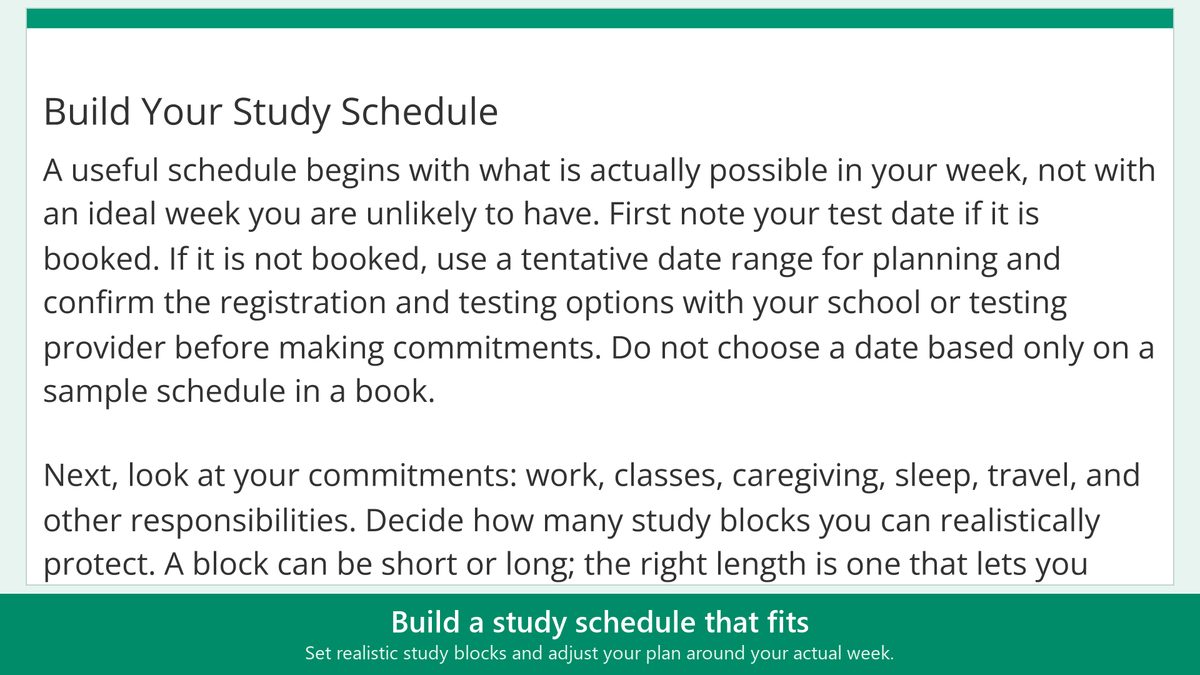
Before assigning subjects to days, write down your commitments for the next four weeks: work, classes, caregiving, sleep, travel, and other responsibilities. Mark study blocks you can realistically protect, and leave room for a missed session or a change in plans. Short sessions can work if you include time to review your reasoning.
For each block, choose one subject or a defined task, such as reviewing a skill, answering a small question set, and examining uncertain answers. If you have limited time, do fewer questions carefully rather than rushing through many without checking your work.
Page 9 of the guide offers a useful reminder:
A schedule is a tool to revise, not a test of willpower.
Use your TEAS study planner as a working document. If a block repeatedly gets displaced, move it or make it smaller instead of treating the original schedule as a pass-or-fail test.
Check official details before planning around them
Use current official information to check the exam format, registration process, appointment details, identification requirements, permitted materials, timing, and score reporting. Confirm requirements with ATI and with the school, program, or testing provider arranging your exam. Details can depend on how and where you test, so another applicant’s experience may not match your instructions.
Put study tasks and logistics in separate parts of your plan. Your practice results can help you choose what to review, but they cannot confirm which exam version your program accepts or what to bring on test day. Recheck appointment instructions closer to the exam and contact the relevant official source if anything is unclear.
This step also keeps your four-week plan grounded: use the time available before your actual appointment, rather than choosing a test date because a sample schedule suggests it.
Use a diagnostic to choose your first priorities
In your next study session, take a small, informal diagnostic across reading, mathematics, science, and English and language usage. You could answer five questions in each area, or choose the same manageable number per subject. Treat the results as a starting point for review, not an official score or a prediction of test-day performance.
Turn each missed or uncertain answer into a next step
- Mark the skill or task the question tested.
- Write why your answer seemed reasonable and what evidence or step you missed.
- Choose one action: review the concept, practise a similar question, or explain the correct reasoning in your own words.
That is a practical way to ask how do I use practice questions to prepare for the TEAS test: use them to find specific skills to work on, then return to those skills after practice.
Give each of the four weeks a job
Use this 4 week TEAS study plan as a flexible outline, not a required minimum or a promise of what will be enough. Fit its tasks to your available blocks and diagnostic findings.
- Week 1: Check official details, take your diagnostic, and begin with one priority from each area.
- Week 2: Review the skills that caused repeated difficulty. Work examples, answer practice questions, and examine explanations.
- Week 3: Keep targeted review going and add mixed practice across all four areas. Track patterns, not just totals.
- Week 4: Revisit priority skills, do final mixed practice, and make a realistic test-day plan using current appointment instructions.
If a session is missed, adjust the remaining tasks rather than trying to squeeze everything into one day. If your timeline changes, the same approach can be reshaped into a TEAS 6 week study plan.
Balance subjects by evidence, not by habit
Wondering what should I study first for the TEAS test? Start with the skill your diagnostic and review log point to, while keeping all four areas active. Give a challenging area an early place in a study week, but continue practising subjects that currently feel stronger. This helps answer how can I balance reading math science and English TEAS review: rotate subjects, then give extra review to recurring gaps.
At the end of each week, note which study blocks you completed, which skills you practised, and what you will do next. One mistake may reflect distraction or a rushed read; repeated difficulty across sessions is a clearer reason to schedule more review. Compare your reasoning and recurring skills, not only practice-set totals.
If you are asking how should I plan my TEAS study schedule, make each block small enough to complete and review, then revise the next week based on what actually happened.
Use a guide when you want review and practice in one place
ATI TEAS Study Guide: Build Test-Day Confidence by Dana Mercer is an independent printable PDF study aid in English, with 136 US Letter pages, clickable bookmarks, and a linked Contents page. It includes a study plan, one review chapter for each TEAS area, worked examples, original practice questions with explained answers, review checklists, cumulative practice with a score-and-review worksheet, and a final-week plan.
- Use the study schedule, diagnostic, and progress tracking to choose what to work on.
- Review reading, math, science, and English and language usage with practice and explanations.
- Preview the reading chapter with the free download of pages 1–39.
The guide is for nursing-school and other health-program applicants, and for tutors or instructors supporting them. It is not official ATI material, its questions are original rather than actual exam questions, and it is not for other exams or anyone seeking leaked questions or a guaranteed score. One tutor or instructor may print copies for up to 10 students in one class or tutoring group. Get the study guide, or start with the free Reading chapter sample.
Frequently asked questions
How should I plan my TEAS study schedule if my week is unpredictable?
Choose a few realistic study blocks, give each a clear task, and leave room for changes. At the end of the week, move or resize blocks based on what actually happened.
What should I study first for the TEAS test?
Take a small diagnostic across all four areas and use missed or uncertain questions to identify your first review priorities. Keep practising every area as you give extra attention to repeated gaps.
How can I balance reading math science and English TEAS review?
Rotate across all four areas rather than postponing a difficult subject. Use your diagnostic and review notes to decide which skills need more time.
Is this guide an official ATI study resource?
No. It is an independent study aid with original practice questions, not actual exam questions. Confirm current exam details with ATI and your program.
ATI TEAS Study Guide: Build Test-Day Confidence: Clear reviews of all four TEAS areas, original practice questions, and explained answers to strengthen readiness for test day.
$15 introductory price until Fri 23 Oct 2026, 4:59 pm ET (then $19). Instant PDF download.
Get the study guide ($15)Try Reading chapter free
Tutoring or teaching a class? Tutor and classroom license ($49): one tutor or instructor may print copies for up to 10 students in one class or tutoring group.